
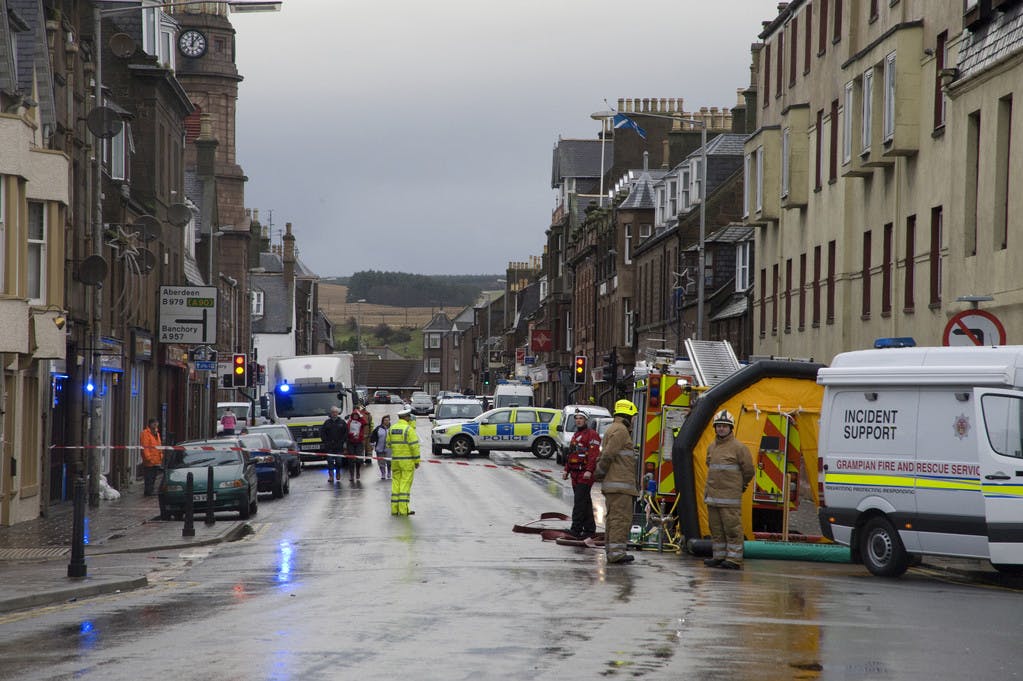
Aberdeenshire Community Resilience Strategy
Welcome to our Community Resilience Strategy page. This is where we host all engagement, consultation and development of our Aberdeenshire Community Resilience Strategy. We will also use it as a handy reference library for documents and guidance that might be helpful when considering our individual, household, family and community resilience.
The page will develop over time so please keep checking back for updates!
Welcome to our Community Resilience Strategy page. This is where we host all engagement, consultation and development of our Aberdeenshire Community Resilience Strategy. We will also use it as a handy reference library for documents and guidance that might be helpful when considering our individual, household, family and community resilience.
The page will develop over time so please keep checking back for updates!
-
SSEN Resilient Communities Fund 2023 - Now open for applications
Share SSEN Resilient Communities Fund 2023 - Now open for applications on Facebook Share SSEN Resilient Communities Fund 2023 - Now open for applications on X (formerly Twitter) Share SSEN Resilient Communities Fund 2023 - Now open for applications on Linkedin Email SSEN Resilient Communities Fund 2023 - Now open for applications linkThe Risk & Resilience to are pleased to announce that SSEN have opened the Resilient Communities Fund 2023 - Please see the message below from SSEN and supporting information documents:
RCF Generator Specification Form 2023
SSEN RCF Application Form Scotland 2023
SSEN RCF Guidelines Acotland 2023
You'll also note that the application form asks the following questions:
- Does your local area have a formal community emergency plan in place?
- Do the plans co-ordinate with local authority plans?
- Does your project complement the work of the emergency services?
- Please describe if you have consulted with any key stakeholders (e.g. emergency services, local authority) or the local community for your project.
To assist you with these questions I've scheduled an evening Microsoft Teams Session at 1900 hours on Wednesday 28 June 2023 where you can discuss your proposed project with Aberdeenshire Council Risk & Resilience Team. If you want to take part on the night just follow this link to the teams meeting.
Thanks
Neil & Vicky
"Good afternoon.
The SSEN Resilient Communities Fund 2023 is now open for applications, with a total of £157,000 available to eligible community groups, community councils and charities in the north of Scotland SSEN network area. Grants will range from £1,000 to £10,000 for single area projects, although exceptional multi-community applications may be considered up to a maximum of £40,000.
SSEN’s Resilient Communities Fund is now in its ninth year, and in that time has seen a wide variety of applications that have all sought to boost communities through improving resilience and responding to the needs of their residents in adverse and difficult circumstances.
The deadline for applications is 5pm on Monday 31 July 2023, and applicants are asked to consider the following criteria for funding, which seeks to support projects falling under these two categories:
- Resilience for emergency events - To enhance community facilities, services and communication specifically to support the local response in the event of a significant emergency such as extended power loss.
- Vulnerability - To protect the welfare of vulnerable community members particularly during significant emergency events such as extended power loss, through enhancing their resilience and improving community participation and effectiveness.
The SSEN Resilient Communities Fund Panel, will review applications and determine which projects should receive funding, with the successful applications announced in the autumn.
Following the conclusion of this final year of the Resilient Communities Fund, SSEN Distribution will be developing and launching a new fund in the later autumn of 2023. While continuing to support community resilience, this new fund will seek to include environmental resilience and the adoption of low carbon technologies. Full details and timescales will be announced later this year.
Best regards
Craig
Craig Mullen || Senior Community Investment Manager
T: 01738 340621
M: 07384 452 823"The Risk & Resilience to are pleased to announce that SSEN have opened the Resilient Communities Fund 2023 - Please see the message below from SSEN and supporting information documents:
RCF Generator Specification Form 2023
SSEN RCF Application Form Scotland 2023
SSEN RCF Guidelines Acotland 2023
You'll also note that the application form asks the following questions:
- Does your local area have a formal community emergency plan in place?
- Do the plans co-ordinate with local authority plans?
- Does your project complement the work of the emergency services?
- Please describe if you have consulted with any key stakeholders (e.g. emergency services, local authority) or the local community for your project.
To assist you with these questions I've scheduled an evening Microsoft Teams Session at 1900 hours on Wednesday 28 June 2023 where you can discuss your proposed project with Aberdeenshire Council Risk & Resilience Team. If you want to take part on the night just follow this link to the teams meeting.
Thanks
Neil & Vicky
"Good afternoon.
The SSEN Resilient Communities Fund 2023 is now open for applications, with a total of £157,000 available to eligible community groups, community councils and charities in the north of Scotland SSEN network area. Grants will range from £1,000 to £10,000 for single area projects, although exceptional multi-community applications may be considered up to a maximum of £40,000.
SSEN’s Resilient Communities Fund is now in its ninth year, and in that time has seen a wide variety of applications that have all sought to boost communities through improving resilience and responding to the needs of their residents in adverse and difficult circumstances.
The deadline for applications is 5pm on Monday 31 July 2023, and applicants are asked to consider the following criteria for funding, which seeks to support projects falling under these two categories:
- Resilience for emergency events - To enhance community facilities, services and communication specifically to support the local response in the event of a significant emergency such as extended power loss.
- Vulnerability - To protect the welfare of vulnerable community members particularly during significant emergency events such as extended power loss, through enhancing their resilience and improving community participation and effectiveness.
The SSEN Resilient Communities Fund Panel, will review applications and determine which projects should receive funding, with the successful applications announced in the autumn.
Following the conclusion of this final year of the Resilient Communities Fund, SSEN Distribution will be developing and launching a new fund in the later autumn of 2023. While continuing to support community resilience, this new fund will seek to include environmental resilience and the adoption of low carbon technologies. Full details and timescales will be announced later this year.
Best regards
Craig
Craig Mullen || Senior Community Investment Manager
T: 01738 340621
M: 07384 452 823" -
April Update
Share April Update on Facebook Share April Update on X (formerly Twitter) Share April Update on Linkedin Email April Update linkGood afternoon everyone, just a short note to give you an update on a couple of isssues, events and plans. Firstly we've been working hard at drafting our 'strategy' document and hope to be able to share a copy soon. We've been reflecting on whether its a strategy, a guide or just a statement of who does what. In any case we hope to be able to share that soon.
I recently shared information on the UK Governments Emergency Alert system. Aberdeenshire Council are still a little in the dark on how it might be used but this Scottish Government Guidance might answer some questions in the interim. There has been media reporting today confirming that the UK Government intend to test the alert on Sunday 23 April 2023 at 1500 hours. Time set for national mobile phone emergency alert test - BBC News.
One piece of work that colleagues in the Fire Service have been developing is guidance for a power cut. This guide contains advice on cooking without electricity, safe use of candles, Carbon Monoxide poisoning and so. Feel free to circulate or incorporate the contents into your own plans.
Finally, the Risk and Resilience Team are hosting an online briefing on the role of the Local Resilience Partnership in an emergency and how Community Groups 'fit into' a response alongside responders. The briefing will take place on Wednesday 24 May 2023 at 1900 hours via Microsoft Teams. If you'd like to attend you can sign up here.
Thanks.
Neil & Vicky
Good afternoon everyone, just a short note to give you an update on a couple of isssues, events and plans. Firstly we've been working hard at drafting our 'strategy' document and hope to be able to share a copy soon. We've been reflecting on whether its a strategy, a guide or just a statement of who does what. In any case we hope to be able to share that soon.
I recently shared information on the UK Governments Emergency Alert system. Aberdeenshire Council are still a little in the dark on how it might be used but this Scottish Government Guidance might answer some questions in the interim. There has been media reporting today confirming that the UK Government intend to test the alert on Sunday 23 April 2023 at 1500 hours. Time set for national mobile phone emergency alert test - BBC News.
One piece of work that colleagues in the Fire Service have been developing is guidance for a power cut. This guide contains advice on cooking without electricity, safe use of candles, Carbon Monoxide poisoning and so. Feel free to circulate or incorporate the contents into your own plans.
Finally, the Risk and Resilience Team are hosting an online briefing on the role of the Local Resilience Partnership in an emergency and how Community Groups 'fit into' a response alongside responders. The briefing will take place on Wednesday 24 May 2023 at 1900 hours via Microsoft Teams. If you'd like to attend you can sign up here.
Thanks.
Neil & Vicky
-
UK Government - Emergency Alerts
Share UK Government - Emergency Alerts on Facebook Share UK Government - Emergency Alerts on X (formerly Twitter) Share UK Government - Emergency Alerts on Linkedin Email UK Government - Emergency Alerts link
Some of you will be aware of the launch of the UK Government Emergency Alerts scheme this week. Vicky and I have received a few questions about the scheme, how it operates and how Aberdeenshire Council and other local responders might utilise it. This update is designed to share what we know about the Emergency Alerts scheme and in some respects what we don't know.
The scheme is owned and run by the UK Government who are responsible for issuing alerts. The link below provides a little more detail that the UK Government have issued.
About Emergency Alerts - GOV.UK (www.gov.uk)
There is also a little more detail on this BBC news article
Public emergency alerts to be sent to all UK smartphones - BBC News
The alert system had a limited geographical trial in East Anglia in 2022 and now there is to be a nationwide three month trial with a national test of the alert on 23 April 2023. Announcements - GOV.UK (www.gov.uk)
The alerts works be sending a message to a smart phone. You don't need to do anything to receive one, but if you wish to opt out of the alerts you can. There is some detail on how to do that here.
How emergency alerts work - GOV.UK (www.gov.uk)
The Scottish and Welsh Governments will also have the ability to issue alerts in certain circumstances and some information has been released by the Scottish Government Emergency Mobile Phone Alerts - gov.scot (www.gov.scot).
At this stage we are not clear how Aberdeenshire Council might use the system to warn and inform of any issue in the North East and together with our colleagues locally from Aberdeen City Council, Moray Council, NHS Grampian and Police, Fire and Ambulance will hear from the Scottish Government at our next Resilience Partnership meeting on how we might access it and what the triggers for doing so could be.
In the meantime Community Councils and Community Resilience Groups should be aware of the trial and you might want to mention it in any newsletters etc. you send out.
We will of course share more information on the alert programme when we have it.
Some of you will be aware of the launch of the UK Government Emergency Alerts scheme this week. Vicky and I have received a few questions about the scheme, how it operates and how Aberdeenshire Council and other local responders might utilise it. This update is designed to share what we know about the Emergency Alerts scheme and in some respects what we don't know.
The scheme is owned and run by the UK Government who are responsible for issuing alerts. The link below provides a little more detail that the UK Government have issued.
About Emergency Alerts - GOV.UK (www.gov.uk)
There is also a little more detail on this BBC news article
Public emergency alerts to be sent to all UK smartphones - BBC News
The alert system had a limited geographical trial in East Anglia in 2022 and now there is to be a nationwide three month trial with a national test of the alert on 23 April 2023. Announcements - GOV.UK (www.gov.uk)
The alerts works be sending a message to a smart phone. You don't need to do anything to receive one, but if you wish to opt out of the alerts you can. There is some detail on how to do that here.
How emergency alerts work - GOV.UK (www.gov.uk)
The Scottish and Welsh Governments will also have the ability to issue alerts in certain circumstances and some information has been released by the Scottish Government Emergency Mobile Phone Alerts - gov.scot (www.gov.scot).
At this stage we are not clear how Aberdeenshire Council might use the system to warn and inform of any issue in the North East and together with our colleagues locally from Aberdeen City Council, Moray Council, NHS Grampian and Police, Fire and Ambulance will hear from the Scottish Government at our next Resilience Partnership meeting on how we might access it and what the triggers for doing so could be.
In the meantime Community Councils and Community Resilience Groups should be aware of the trial and you might want to mention it in any newsletters etc. you send out.
We will of course share more information on the alert programme when we have it.
-
February 2023 Update
Share February 2023 Update on Facebook Share February 2023 Update on X (formerly Twitter) Share February 2023 Update on Linkedin Email February 2023 Update linkThe Risk & Resilience Team are conscious its been a few weeks since we shared information with you all. We had a busy few weeks in the run up to Christmas and this year have been working hard on testing, exercising and reviewing some of our plans. While much of time is spent on Community Resilience we still have to manage our commitments to a whole range of Emergency and Business Continuity Plans.
We are progressing the drafting of the Community Resilience Strategy and hope to be able to share an early draft soon but more importantly we've been revising all of our Rest Centre plans with a view to overlaying what the Council does with provision that local groups have in place. So, if you represent a group that has developed a resilience plan remember and share it with your local Area Office to help us map out provision.
Many of you will have seen news reports of energy rationing and Rota Load Disconnection. In very simple terms this is a tool that the United Kingdom Government has had in place since the 1970's which allows the National Grid to balance energy supplies in periods of high demand. The conflict in Ukraine has resulted in greater awareness of this tool and SSEN have helpfuly written to all their Priority Service Register customers explaining how it works and may affect them. SSEN have agreed that we can share this letter with you as it contains very useful information. You'll note of course that it not personalised so to find out you Rota Load Disconnection Code please visit SSEN | My Rota Block.
In other news, SEPA have announced a new Scottish Flood Forecast product that now warns of public three days in advance:
If you don't already receive flood alerts from SEPA we enourage you to sign up.
Finally, the Scottish Government are hosting an online Resilience Conference in March and April this year. There are a number of sessions you can sign up to including:
COMMUNITY SESSIONS: THE “NUTS AND BOLTS” OF COMMUNITY RESILIENCE IN EMERGENCIES - What can community groups, responders and policy makers learn from each other on community resilience, to improve outcomes from emergency situations and increase our collective resilience?
PRACTITIONER’S SESSION: SHARING GOOD PRACTICE AND INSIGHT ON SUPPORTING AND WORKING WITH LOCAL COMMUNITIES - How has community resilience evolved since the start of the Covid-19 pandemic and what can practitioners learn from each other?
COMMUNITY RESILIENCE AND CLIMATE CHANGE: BUILDING CONNECTIONS AND PARTNERSHIPS ACROSS COMMUNITY-LED EMERGENCY RESPONSE AND LONG TERM ADAPTATION - CoRE activities often focus on the most immediate impacts of climate, and climate change, related events alongside communities of interest who focus their efforts on the longer-term adaptation to climate change. This workshop will explore how to build stronger connections between community resilience in emergencies and climate change adaptation.
AN INCLUSIVE APPROACH TO COMMUNITY RESILIENCE IN EMERGENCIES - It is critical that community resilience in emergencies is inclusive and more equitable for all, but this isn’t always easy or straightforward. How can more community voices be part of local resilience planning and community action, and what needs to be in place for this to happen?
The Risk & Resilience Team will be participating in these sessions so maybe see you there. You can find out more here and sign up for the sessions.
That's all for just now.
Neil & Vicky
The Risk & Resilience Team are conscious its been a few weeks since we shared information with you all. We had a busy few weeks in the run up to Christmas and this year have been working hard on testing, exercising and reviewing some of our plans. While much of time is spent on Community Resilience we still have to manage our commitments to a whole range of Emergency and Business Continuity Plans.
We are progressing the drafting of the Community Resilience Strategy and hope to be able to share an early draft soon but more importantly we've been revising all of our Rest Centre plans with a view to overlaying what the Council does with provision that local groups have in place. So, if you represent a group that has developed a resilience plan remember and share it with your local Area Office to help us map out provision.
Many of you will have seen news reports of energy rationing and Rota Load Disconnection. In very simple terms this is a tool that the United Kingdom Government has had in place since the 1970's which allows the National Grid to balance energy supplies in periods of high demand. The conflict in Ukraine has resulted in greater awareness of this tool and SSEN have helpfuly written to all their Priority Service Register customers explaining how it works and may affect them. SSEN have agreed that we can share this letter with you as it contains very useful information. You'll note of course that it not personalised so to find out you Rota Load Disconnection Code please visit SSEN | My Rota Block.
In other news, SEPA have announced a new Scottish Flood Forecast product that now warns of public three days in advance:
If you don't already receive flood alerts from SEPA we enourage you to sign up.
Finally, the Scottish Government are hosting an online Resilience Conference in March and April this year. There are a number of sessions you can sign up to including:
COMMUNITY SESSIONS: THE “NUTS AND BOLTS” OF COMMUNITY RESILIENCE IN EMERGENCIES - What can community groups, responders and policy makers learn from each other on community resilience, to improve outcomes from emergency situations and increase our collective resilience?
PRACTITIONER’S SESSION: SHARING GOOD PRACTICE AND INSIGHT ON SUPPORTING AND WORKING WITH LOCAL COMMUNITIES - How has community resilience evolved since the start of the Covid-19 pandemic and what can practitioners learn from each other?
COMMUNITY RESILIENCE AND CLIMATE CHANGE: BUILDING CONNECTIONS AND PARTNERSHIPS ACROSS COMMUNITY-LED EMERGENCY RESPONSE AND LONG TERM ADAPTATION - CoRE activities often focus on the most immediate impacts of climate, and climate change, related events alongside communities of interest who focus their efforts on the longer-term adaptation to climate change. This workshop will explore how to build stronger connections between community resilience in emergencies and climate change adaptation.
AN INCLUSIVE APPROACH TO COMMUNITY RESILIENCE IN EMERGENCIES - It is critical that community resilience in emergencies is inclusive and more equitable for all, but this isn’t always easy or straightforward. How can more community voices be part of local resilience planning and community action, and what needs to be in place for this to happen?
The Risk & Resilience Team will be participating in these sessions so maybe see you there. You can find out more here and sign up for the sessions.
That's all for just now.
Neil & Vicky
-
Are You Ready for Winter?
Share Are You Ready for Winter? on Facebook Share Are You Ready for Winter? on X (formerly Twitter) Share Are You Ready for Winter? on Linkedin Email Are You Ready for Winter? linkHello everyone, just a very brief update to say that Aberdeenshire Council have produced the 'Are You Ready for Winter?' leaflet. This is designed to be a quick, interim guide while we continue to develop Individual Preparedness Guides. It's also not meant to replace any of the work that groups have done locally with your own products. Feel free to circulate it as requried.
We are still working our way through the workshop feedback and we hope to release information shortly that will advise on how the additional £1 million from SSEN can be accessed. More on that later.
Some plans are underway to improve information sharing and we are actively exploring the 'Ready Aberdeenshire' website and Community Resilience Conference.
For those of you who have been developing resilience plans, thank you. If you need any assistance with the development please get in touch with your local Area Team. If you've finalised a plan that involves the use of a hall or venue as a Community Resilience facility and you are ready to execute that plan in an emergency please also let the Area Team know as we have begun to map the locations and hope to use that to produce a product for us all.
I think that's about it for moment. Thanks for the continued support.
Neil & Vicky
Hello everyone, just a very brief update to say that Aberdeenshire Council have produced the 'Are You Ready for Winter?' leaflet. This is designed to be a quick, interim guide while we continue to develop Individual Preparedness Guides. It's also not meant to replace any of the work that groups have done locally with your own products. Feel free to circulate it as requried.
We are still working our way through the workshop feedback and we hope to release information shortly that will advise on how the additional £1 million from SSEN can be accessed. More on that later.
Some plans are underway to improve information sharing and we are actively exploring the 'Ready Aberdeenshire' website and Community Resilience Conference.
For those of you who have been developing resilience plans, thank you. If you need any assistance with the development please get in touch with your local Area Team. If you've finalised a plan that involves the use of a hall or venue as a Community Resilience facility and you are ready to execute that plan in an emergency please also let the Area Team know as we have begun to map the locations and hope to use that to produce a product for us all.
I think that's about it for moment. Thanks for the continued support.
Neil & Vicky
-
Community Resilience Workshops - Round Up
Share Community Resilience Workshops - Round Up on Facebook Share Community Resilience Workshops - Round Up on X (formerly Twitter) Share Community Resilience Workshops - Round Up on Linkedin Email Community Resilience Workshops - Round Up linkThank you to everyone who was able to come along to the Community Resilience Strategy Workshops. We had over 130 people register and some great discussions took place over the 6 sessions. There is a huge amount for the team to absorb and we are working through all of that now. We've set this page up to help with the work of improving resilience in Aberdeenshire and we hope to use it as a resource for us all as well. You'll see that we've added a number of links to the page where you can get more information as well some of the documents referenced in the sessions. For those who weren't able to attend you can see the presentation here.
There were some key issues raised so hopefully this message will give some updates for everyone.
Individual, Household, Family and Community Resilience
While we are working through all the notes and feedback there was clear support for the development of the concept of individual, household, family and community resilience. Our challenge is now to articulate that in the strategy but more practically convert that into meaningful action. We are working hard on this and will keep everyone updated on progress.
Digital Telephones
We know there are concerns about the retirement of the Public Switched Telephone Network (PSTN) and the move to a digital telephone network by 2025. We are grateful to our colleague Jack Rigby, from the Council's Digital Engagement Team who was able to make some of the sessions and give really clear insight and information about the switch over and what it means for us all. The big take away message was that the roll over is happening by 2025 but that If you are dependent on your landline phone – for example, if you don’t have a mobile phone or don’t have mobile signal at your home – then your provider must offer you a solution to make sure you can contact the emergency services when a power cut occurs. For example, a mobile phone (if you have signal), or a battery back-up unit for your landline phone. Detailed advice is available from Ofcom the telecoms regulator.
The Digital Engagement Team welcome contact so if you want to discuss an issue in more detail please get in touch with them.
Individual Preparedness Guides
Currently Aberdeenshire Council promote the guidance on Ready Scotland which is the Scottish Government website for the promotion of resilience matters in Scotland. There is a lot of useful information in this site but feedback we've received following the winter storms and in general is that the Individual Preparedness Guides on Ready Scotland are a little on the light side and can be improved. The information is of course all on Ready Scotland but not in a single document which many find easier to use.
That's why we've looked elsewhere both within the United Kingdom and internationally. To the right of this page you'll see a link to the Household Emergency Plan produced by SSEN and of course those international documents (New Zealand, Canda, Norway, Sweden) we discussed. The SSEN document provides lots of helpful material and is ready to use. We would commend that to you. We will continue to develop an Aberdeenshire Individual Preparedness Guide and welcome comments or thoughts on how this can be developed.
As we develop a draft Aberdeenshire version we will share that for thoughts and comments.
Household Emergency Kits
A consistent message from the sessions was guidance on what to include in a household kit. This was also a strong theme during the engagement sessions we carried out following the storms. There is good advice out there, particularly from SSEN but we accept that Aberdeenshire Council could provide some guidance here. We will put out some quick information on this soon which can be shared.
Community Hubs
We know that many Community Resilience Groups are looking for guidance on where their particular premises fits into any response and in many ways we can't offer any certainty to that answer. Each response will be different depending on the needs of the emergency we face. Costs, insurance liabilities and other issues also feature in this and there is a report currently under consideration within the council that will clarify the position. Some are concerned that they may duplicate council provision, our view in the Risk and Resilience Team is that this isn't a problem and that groups should decide when to open their own venues depending on the circumstances they see in their own area.
Vulnerable People
During the Winter Storms many of us were involved in exercises to visit the addresses of those we consider vulnerable. We also know and appreciate that many groups would like access to the information that the Council, Health & Social Care Partnership and NHS hold. While we understand why, it's unlikely to happen due to the compex nature of sharing personal medical information. As partners, Council, Health & Social Care Partnership and NHS are signed up to the Persons at Risk Distribution (PARD) project where we can access the details of anyone who may need additional help in an emergency.
We do recgonise that some groups may wish to maintain more formal self registering lists that they maintain. Groups can do this as long as they adhere to the principles of the General Data Protection Regularions and we may be able to help.
We continue to promote the Priority Service Registers in Scotland. The Priority Services Register (PSR) is a free UK wide service which provides extra help during power cuts or when there’s an interruption to your electricity, gas or water supply. Joining the PSR helps companies to provide adapted services, adjust communications and make amendments to keep you safe, such as setting up a password scheme and providing advance warning of planned interruptions to electricity, gas or water supplies.
SSEN Funding
Finally, we just wanted to touch on the funding that SSEN have set aside for Aberdeenshire. Following the completion of internal and external reviews into the Winter Storms of 2021/22, SSEN have announced an additional £3.5m of funding to support network and community resilience. This comprises:
- £1.2m for additional network resilience investment, focused on enhanced protection of key circuits and contingency measures to help improve response time in future major storm events.
- £1.8m of ring-fenced funding for local authorities in the most affected regions to support community and personal resilience projects, focused on the vulnerable, adding to the £0.5m boost to SSEN’s Resilient Communities Fund which was awarded in September.
- A total of 27 awards totaling approximately £460,000 has been made to Aberdeenshire based applicants.
Of the £1.8m SSEN have allocated to Local Authorities, £1m will be made available to Aberdeenshire Council as part of a ring-fenced fund. This award is based on analysis on the customers impacted within the Aberdeenshire Council area for over 48 hours.
The core focus of the funding is to support community, household, and personal resilience projects, with a focus on those most vulnerable in our communities. Initiatives will be subject to mutual agreement between SSEN and Aberdeenshire Council and should follow the guidance below:
- Funding should be used for new projects and shouldn’t replace funding or services that already exist.
- The projects or initiatives chosen should have a tangible or physical benefit for local communities and vulnerable members in particular.
- Projects, wherever possible should be sustainable in nature. For example, exploring battery storage solutions over generation facilities.
- Applications for additional resource to support community and personal resilience will be considered but should not be the sole focus of the funding submissions.
We welcome suggestions on how to utilise this funding so please get in touch if you've a suggestion.
I think that's all for the moment. We will share some more info soon. Thanks for all the support.
Neil & Vicky
Thank you to everyone who was able to come along to the Community Resilience Strategy Workshops. We had over 130 people register and some great discussions took place over the 6 sessions. There is a huge amount for the team to absorb and we are working through all of that now. We've set this page up to help with the work of improving resilience in Aberdeenshire and we hope to use it as a resource for us all as well. You'll see that we've added a number of links to the page where you can get more information as well some of the documents referenced in the sessions. For those who weren't able to attend you can see the presentation here.
There were some key issues raised so hopefully this message will give some updates for everyone.
Individual, Household, Family and Community Resilience
While we are working through all the notes and feedback there was clear support for the development of the concept of individual, household, family and community resilience. Our challenge is now to articulate that in the strategy but more practically convert that into meaningful action. We are working hard on this and will keep everyone updated on progress.
Digital Telephones
We know there are concerns about the retirement of the Public Switched Telephone Network (PSTN) and the move to a digital telephone network by 2025. We are grateful to our colleague Jack Rigby, from the Council's Digital Engagement Team who was able to make some of the sessions and give really clear insight and information about the switch over and what it means for us all. The big take away message was that the roll over is happening by 2025 but that If you are dependent on your landline phone – for example, if you don’t have a mobile phone or don’t have mobile signal at your home – then your provider must offer you a solution to make sure you can contact the emergency services when a power cut occurs. For example, a mobile phone (if you have signal), or a battery back-up unit for your landline phone. Detailed advice is available from Ofcom the telecoms regulator.
The Digital Engagement Team welcome contact so if you want to discuss an issue in more detail please get in touch with them.
Individual Preparedness Guides
Currently Aberdeenshire Council promote the guidance on Ready Scotland which is the Scottish Government website for the promotion of resilience matters in Scotland. There is a lot of useful information in this site but feedback we've received following the winter storms and in general is that the Individual Preparedness Guides on Ready Scotland are a little on the light side and can be improved. The information is of course all on Ready Scotland but not in a single document which many find easier to use.
That's why we've looked elsewhere both within the United Kingdom and internationally. To the right of this page you'll see a link to the Household Emergency Plan produced by SSEN and of course those international documents (New Zealand, Canda, Norway, Sweden) we discussed. The SSEN document provides lots of helpful material and is ready to use. We would commend that to you. We will continue to develop an Aberdeenshire Individual Preparedness Guide and welcome comments or thoughts on how this can be developed.
As we develop a draft Aberdeenshire version we will share that for thoughts and comments.
Household Emergency Kits
A consistent message from the sessions was guidance on what to include in a household kit. This was also a strong theme during the engagement sessions we carried out following the storms. There is good advice out there, particularly from SSEN but we accept that Aberdeenshire Council could provide some guidance here. We will put out some quick information on this soon which can be shared.
Community Hubs
We know that many Community Resilience Groups are looking for guidance on where their particular premises fits into any response and in many ways we can't offer any certainty to that answer. Each response will be different depending on the needs of the emergency we face. Costs, insurance liabilities and other issues also feature in this and there is a report currently under consideration within the council that will clarify the position. Some are concerned that they may duplicate council provision, our view in the Risk and Resilience Team is that this isn't a problem and that groups should decide when to open their own venues depending on the circumstances they see in their own area.
Vulnerable People
During the Winter Storms many of us were involved in exercises to visit the addresses of those we consider vulnerable. We also know and appreciate that many groups would like access to the information that the Council, Health & Social Care Partnership and NHS hold. While we understand why, it's unlikely to happen due to the compex nature of sharing personal medical information. As partners, Council, Health & Social Care Partnership and NHS are signed up to the Persons at Risk Distribution (PARD) project where we can access the details of anyone who may need additional help in an emergency.
We do recgonise that some groups may wish to maintain more formal self registering lists that they maintain. Groups can do this as long as they adhere to the principles of the General Data Protection Regularions and we may be able to help.
We continue to promote the Priority Service Registers in Scotland. The Priority Services Register (PSR) is a free UK wide service which provides extra help during power cuts or when there’s an interruption to your electricity, gas or water supply. Joining the PSR helps companies to provide adapted services, adjust communications and make amendments to keep you safe, such as setting up a password scheme and providing advance warning of planned interruptions to electricity, gas or water supplies.
SSEN Funding
Finally, we just wanted to touch on the funding that SSEN have set aside for Aberdeenshire. Following the completion of internal and external reviews into the Winter Storms of 2021/22, SSEN have announced an additional £3.5m of funding to support network and community resilience. This comprises:
- £1.2m for additional network resilience investment, focused on enhanced protection of key circuits and contingency measures to help improve response time in future major storm events.
- £1.8m of ring-fenced funding for local authorities in the most affected regions to support community and personal resilience projects, focused on the vulnerable, adding to the £0.5m boost to SSEN’s Resilient Communities Fund which was awarded in September.
- A total of 27 awards totaling approximately £460,000 has been made to Aberdeenshire based applicants.
Of the £1.8m SSEN have allocated to Local Authorities, £1m will be made available to Aberdeenshire Council as part of a ring-fenced fund. This award is based on analysis on the customers impacted within the Aberdeenshire Council area for over 48 hours.
The core focus of the funding is to support community, household, and personal resilience projects, with a focus on those most vulnerable in our communities. Initiatives will be subject to mutual agreement between SSEN and Aberdeenshire Council and should follow the guidance below:
- Funding should be used for new projects and shouldn’t replace funding or services that already exist.
- The projects or initiatives chosen should have a tangible or physical benefit for local communities and vulnerable members in particular.
- Projects, wherever possible should be sustainable in nature. For example, exploring battery storage solutions over generation facilities.
- Applications for additional resource to support community and personal resilience will be considered but should not be the sole focus of the funding submissions.
We welcome suggestions on how to utilise this funding so please get in touch if you've a suggestion.
I think that's all for the moment. We will share some more info soon. Thanks for all the support.
Neil & Vicky
-
NC
Phone 01467530677 Email riskandresilienceteam@aberdeenshire.gov.uk -
VM
-
AB


-
 Community Resilience Engagement and Training Sessions 2026.pdf (39.8 KB) (pdf)
-
Telecoms Resilience Document 2.0.pdf (364 KB) (pdf)
-
Supporting Vulnerable People in the Community Advice Note.pdf (622 KB) (pdf)
-
Community Councils - Insurance FAQs.pdf (683 KB) (pdf)
-
Flooding - Roles and Responsibilities.pdf (442 KB) (pdf)
-
Community Resilience Plan Advice Note.pdf (401 KB) (pdf)
-
Community Resilience Plan Template.docx (340 KB) (docx)
-
Generators Advice Note.pdf (260 KB) (pdf)
-
Setting up a Resilience Group Advice Note.pdf (234 KB) (pdf)
-
Ideas for Resilience Activities Advice Note.pdf (249 KB) (pdf)
-
Individual Preparedness Advice Note.pdf (285 KB) (pdf)
-
Funding Advice Note.pdf (258 KB) (pdf)
-
How to set up a Community Hub Advice Note.pdf (251 KB) (pdf)
-
Emergency Household Plan Advice Note.pdf (767 KB) (pdf)
-
Emergency Household Plan Template.docx (318 KB) (docx)
-
Age Scotland Building Resilience Advice Booklet.pdf (1.12 MB) (pdf)
-
The role of Councillors in an Emergency - Advice Note.pdf (230 KB) (pdf)
-
Aberdeenshire Community Resillience Framework.pdf (6.77 MB) (pdf)
-
Open
Aberdeenshire Community Resilience Strategy is currently at this stageThis consultation is open for contributions.
-
Under Review
this is an upcoming stage for Aberdeenshire Community Resilience StrategyContributions to this consultation are closed for evaluation and review. The project team will report back on key outcomes.
-
Final report
this is an upcoming stage for Aberdeenshire Community Resilience StrategyThe final outcomes of the consultation are documented here. This may include a summary of all contributions collected as well as recommendations for future action.